Where Are Volunteers Needed the Most? (The Answer Is Closer Than You Think)
Updated August 2026.
Short answer: Right now, volunteers are needed most in five places: food banks and meal delivery for seniors, hospice and end-of-life care, disaster relief, crisis and support lines, and one-on-one help for people who are stuck (rides, childcare, a hand with a move). But the single biggest gap isn’t inside any organization. It’s the people around you who have no one to ask. That’s where a couple of your hours changes someone’s life, and this article shows you how to find them.
- Where volunteers are most needed right now (ranked, with data)
- Where are volunteers most needed in the world?
- The need nobody counts: your own neighborhood
- San Jose & the Bay Area
- A two-minute test
- FAQ
Where volunteers are most needed right now (a ranked list, with data)
Most “where to volunteer” lists are a copy of each other: animal shelter, hospital, library. Those are fine places. They also have waiting lists of volunteers. Below is a different list, ranked by where the shortage of helpers is actually hurting people, based on what the organizations themselves report.
1. Home-delivered meals and transportation for seniors
This is the clearest shortage in America today. Meals on Wheels America reports that nearly 46,000 seniors are sitting on waitlists for meal delivery, and one in three local providers has a waitlist at all. Over half of local programs say a lack of volunteers is a major reason they can’t reach more people.
Behind the number is something simpler: not enough drivers. A single volunteer route is usually 60 to 90 minutes, once a week or once a month. For many of the seniors on the route, the person delivering the meal is the only person who checks on them that day.
What you’d actually do: drive a route, or make “friendly caller” phone calls to homebound seniors from your couch.
Time: 1–2 hours a week, or even a month.
2. Hospice and end-of-life care
Hospice programs that accept Medicare are required by federal rules to have volunteers provide a share of their patient-care hours, so they are always recruiting. And the work is not medical. It’s sitting with someone so their spouse can take a shower. Reading out loud. Holding a hand.
Most people never consider this one because it sounds heavy. Ask any hospice volunteer and they’ll tell you it’s the most meaningful thing they do.
What you’d actually do: companionship visits, respite for family caregivers, phone check-ins.
Time: 2–4 hours a week, with training provided.
3. Food banks and pantries
Food banks are the classic answer, and they still belong on the list, especially around Thanksgiving and in the summer when donations drop. The need is real, but it’s also the most crowded option: big-city food banks often have more volunteer sign-ups than shifts on weekends.
Insider tip: the shortage is on weekday mornings and at small church and neighborhood pantries, not at the big warehouse on a Saturday. Ask which shift they struggle to fill and take that one.
Time: a 2–3 hour shift.
4. Disaster relief
Floods, wildfires, hurricanes. Organizations like the Red Cross and local Community Emergency Response Teams (CERT) need trained people before a disaster happens, not the week after, when everyone wants to help at once. If you live in California, Texas, Florida, or anywhere along the Gulf Coast, get trained now and you’ll be one of the few ready when it matters.
What you’d actually do: shelter support, distributing supplies, damage assessment, phone intake.
Time: a training weekend, then on-call.
5. Crisis and support lines
Text and phone crisis lines, warmlines for people who just need someone to talk to, domestic violence hotlines. All of them run on volunteers, all of them have too few, and demand rises every year. This is also one of the few options you can do entirely from home, late at night.
What you’d actually do: take shifts after training (usually 20–30 hours of it).
Time: one 4-hour shift a week, typically.
6. Tutoring and mentoring kids
Reading tutors in elementary schools, homework help, mentoring programs like Big Brothers Big Sisters. Waitlists here are on the kids’ side: there are thousands of children matched with no mentor because there aren’t enough adults. Men are especially short in supply.
Time: 1 hour a week, same kid, for a school year.
7. Anything in a rural area
Whatever the cause, if you live outside a major metro, your help counts double. Nearly two-thirds of Meals on Wheels programs with waitlists serve rural areas, and the same pattern shows up in fire departments, ambulance services, and food pantries. Fewer people, longer distances, same needs.
Where are volunteers most needed in the world?
You’ll see this question a lot, so here’s an honest answer. Internationally, the biggest needs are in refugee support, disaster response, and health care in low-income countries. But unless you’re a nurse, a doctor, an engineer, or you speak the language, a two-week trip abroad usually costs more than the value you create there, and reputable organizations will tell you the same.
If you want to help globally, donating to a well-run organization does more than flying yourself over. If you want to volunteer, the person who needs you most is almost certainly within twenty miles of your house. The rest of this article is about finding them.
The need nobody counts: your own neighborhood
Here’s the part that no “top 10 places to volunteer” list covers.
Every organization on the list above serves people who managed to get into a system: they qualified, they applied, they got on a list. But an enormous number of people who need help never make it into any system at all. Nobody counts them because there’s no form for what they need.
Some numbers to give it shape. About 28% of Americans aged 65 and older live alone, more than 16 million people, and nearly 4 in 10 of them have a disability that makes daily life hard. After 75, 43% of women live by themselves. Most of them don’t qualify for a program. They just need someone to drive them to an appointment, carry the water bottles up the stairs, or figure out why the phone stopped working.
Then there are single parents with no family nearby, people recovering from surgery, newcomers to a city who don’t know a single person yet. None of them are “clients.” All of them are stuck.
And here’s what surprised me most when I started paying attention: the help they need is small. Two hours. One ride. One evening of babysitting. It’s the kind of thing a neighbor did without thinking fifty years ago. Today, most of us don’t know our neighbors, and asking a stranger feels impossible.
A real example: three hours and a driver’s license
A few weeks ago, a young mom posted a request on Merit, the app I built. She’d recently moved to San Jose with a toddler a little over a year old. In California, no car means no life: no job interviews, no daycare drop-off, no way out of a situation that isn’t working. She didn’t have a car of her own and was completely dependent on someone else for every trip.
She had thought it through. Step one: get a driver’s license. Step two: save up for a used car. Step three: get to interviews, find a job, and start a life on her own terms. But you can’t take the California driving test without bringing a car, and she had no one to ask.
So she asked strangers. A volunteer saw her request, drove over in his own car, took her to the DMV, and waited about two hours while she took the test. She passed.
Three hours of one person’s afternoon. That’s all it took. See the moment on Instagram. Her next step is the car, and she’s planning to ask for help with that too.
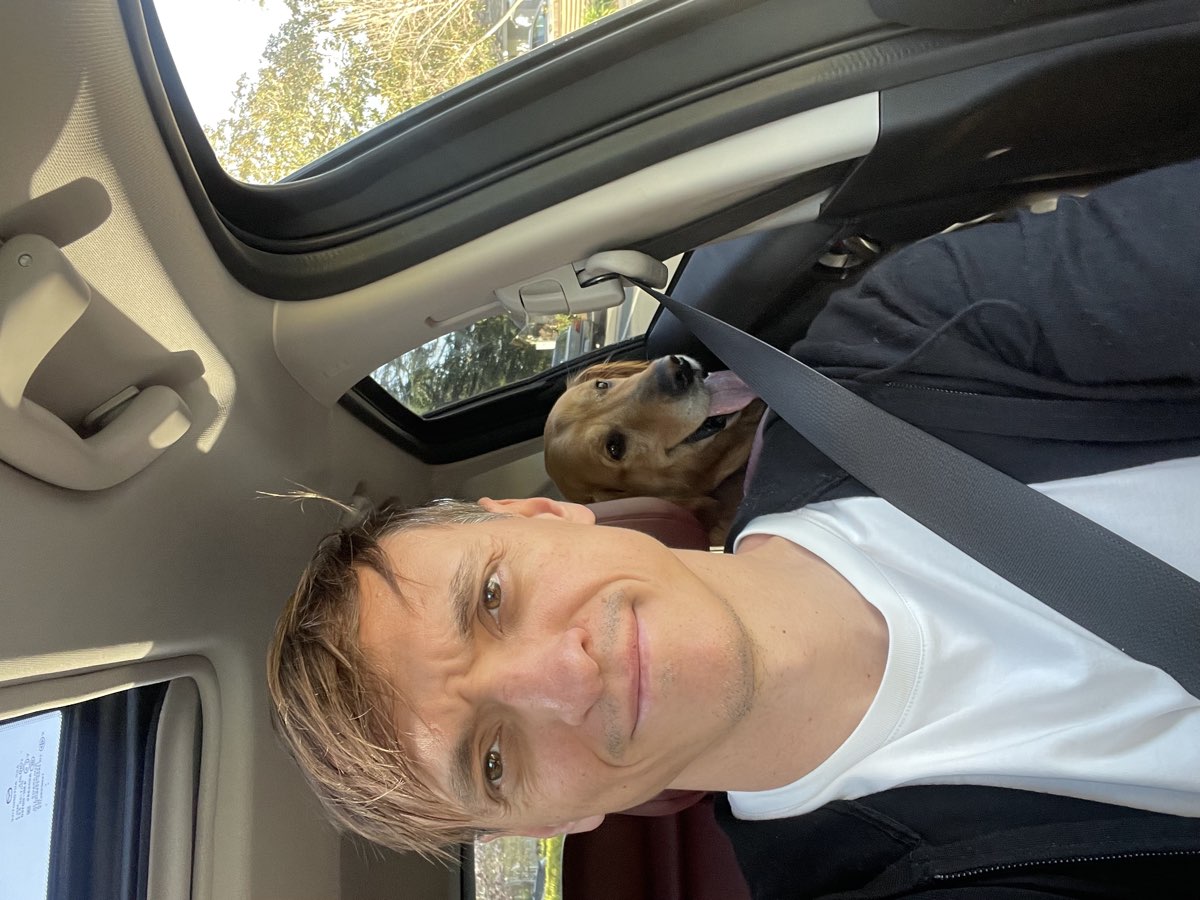
No organization would have listed “help a stranger pass her driving test” as a volunteer opportunity. But that is exactly where a volunteer was needed most that day.
Where are volunteers needed most in San Jose and the Bay Area?
If you’re local, here’s where the shortages are as of this year. (I’ll keep this list updated, and if you run a program that needs people, andrei@royalmerit.ai and I’ll add you.)
- Second Harvest of Silicon Valley — the region’s food bank. Weekend shifts fill up; weekday mornings and sorting shifts at satellite sites are the ones they struggle with.
- Sacred Heart Community Service (San Jose) — clothing and food distribution, plus community programs. Consistent need for regular, not one-time, volunteers.
- Meals on Wheels programs in Santa Clara County — drivers, especially midday on weekdays. Check the Meals on Wheels America finder for the program covering your zip code.
- Hospice providers across the county — companionship volunteers. Search “hospice volunteer Santa Clara County.”
- CityTeam San Jose — warehouse and meal service, needs change daily.
- City of San José volunteer events — park cleanups and one-day events, good for groups and families.
- Merit — small, direct requests from people nearby: a ride, help carrying furniture, a couple of hours with a kid, a trip to the DMV. No application, no schedule, no organization in between. You see what someone nearby needs, and you decide whether you can do it.
Two more that I know personally and that almost never show up on the big volunteer lists:
- WEIRA — a Northern California nonprofit that supports immigrant women from Eastern Europe and Central Asia in crisis: domestic violence, a hard divorce, a job loss, a brand-new life in a country where they know no one. Since it started, the team has handled more than 460 crisis inquiries and logged over 7,000 hours of one-on-one support, mostly through volunteers.
- Career Pathway Institute — a San Jose-born community for immigrants stuck outside the job market, often spouses who came here on a dependent visa and can’t get a first interview without U.S. experience. Their fix is smart: professional volunteering that closes the résumé gap, plus workshops and mentoring. Over 2,400 members across the country so far. Where they need help: recruiters and hiring managers to run mock interviews and résumé reviews, speakers for events, and professionals willing to mentor one person for a few months.
How to choose where you’re needed most: a two-minute test
Don’t pick the cause that sounds best. Pick the one where you fill a gap. Three questions:
1. What do you have that’s scarce? A car and a free weekday morning? You’re a Meals on Wheels driver or a DMV chauffeur. A quiet evening and patience? Crisis lines and hospice. Speak Spanish, Vietnamese, Mandarin, or Russian? Every organization in the Bay Area is short on you, and so is every newcomer who doesn’t speak English yet.
2. Can you show up more than once? Organizations lose more volunteers to no-shows than to a lack of sign-ups. If you can’t commit to a schedule, don’t sign up for one. Do one-time, direct help instead (see Merit above) and nobody is let down.
3. Would you notice if you disappeared? This is the real test. If your absence from a volunteer shift would go unnoticed because ten other people signed up, you’re in the wrong place. If one specific person would be stuck without you, you’re exactly where you’re needed most.
Frequently asked questions
What is the golden rule of volunteering?
Show up when you said you would, and do what’s actually needed, not what you feel like doing. Organizations plan their week around your “yes.” A reliable volunteer who does the boring task is worth more than a talented one who cancels.
What are the four C’s of volunteering?
Different trainers use slightly different versions, but the common one is Commitment, Consistency, Communication, and Compassion. Commit to something you can sustain, show up consistently, communicate early when plans change, and remember there’s a real person on the other end of the task.
Is there a downside to volunteering?
Two honest ones. First, burnout: people who say yes to everything quit within a year. Start smaller than you think you should. Second, mismatch: some organizations treat volunteers as free labor for tasks that don’t need to exist. If you feel useless after three visits, leave and find a place where you’re not.
What are some cool volunteer opportunities?
If “sorting cans” doesn’t excite you: coaching a kids’ sports team, being a volunteer ski patroller, teaching seniors to use their phones, fostering a dog, being a museum docent, taking a stranger to the DMV so she can pass her driving test. Cool is whatever you’ll actually keep doing.
How many hours a week do I need to volunteer?
None, formally. AmeriCorps data shows that while 28% of Americans volunteer through an organization, 54% help their neighbors informally, with errands, childcare, and the like. Informal help is the biggest volunteer force in the country and it doesn’t require a single sign-up form.
The bottom line
Volunteers are needed most where there’s a shortage of hands, not a shortage of interest: meal delivery, hospice, rural programs, crisis lines. Pick one, take the unpopular shift, and you’ll matter.
But before you fill out an application anywhere, look closer to home. The people who need you most are the ones nobody has listed as a “volunteer opportunity”: the mom who can’t get to the DMV, the neighbor who can’t lift the box, the person who just moved here and knows no one. Merit exists to help you find them. Download it, see who nearby needs a hand this week, and give two hours. You’ll notice you disappeared, and so will they.
Sources: AmeriCorps / U.S. Census Bureau, Volunteering and Civic Life in America (2024); Meals on Wheels America, The Urgent Need: Waitlists (2026); Meals on Wheels America, The State of Volunteerism (2025); KFF Health News, Historic Numbers of Americans Live by Themselves as They Age.
About the author: Andrei Novikov is the founder of Merit, a free app that connects people who need a hand with people nearby who are willing to help. He built Merit around a simple idea: most life-changing help takes two hours, not a foundation — it just needs a way to be seen.
Merit is an app where kind people help each other — and earn real-life rewards for doing good deeds.